
Why More Dealerships Are Bringing Auto Glass and ADAS Calibration In-House

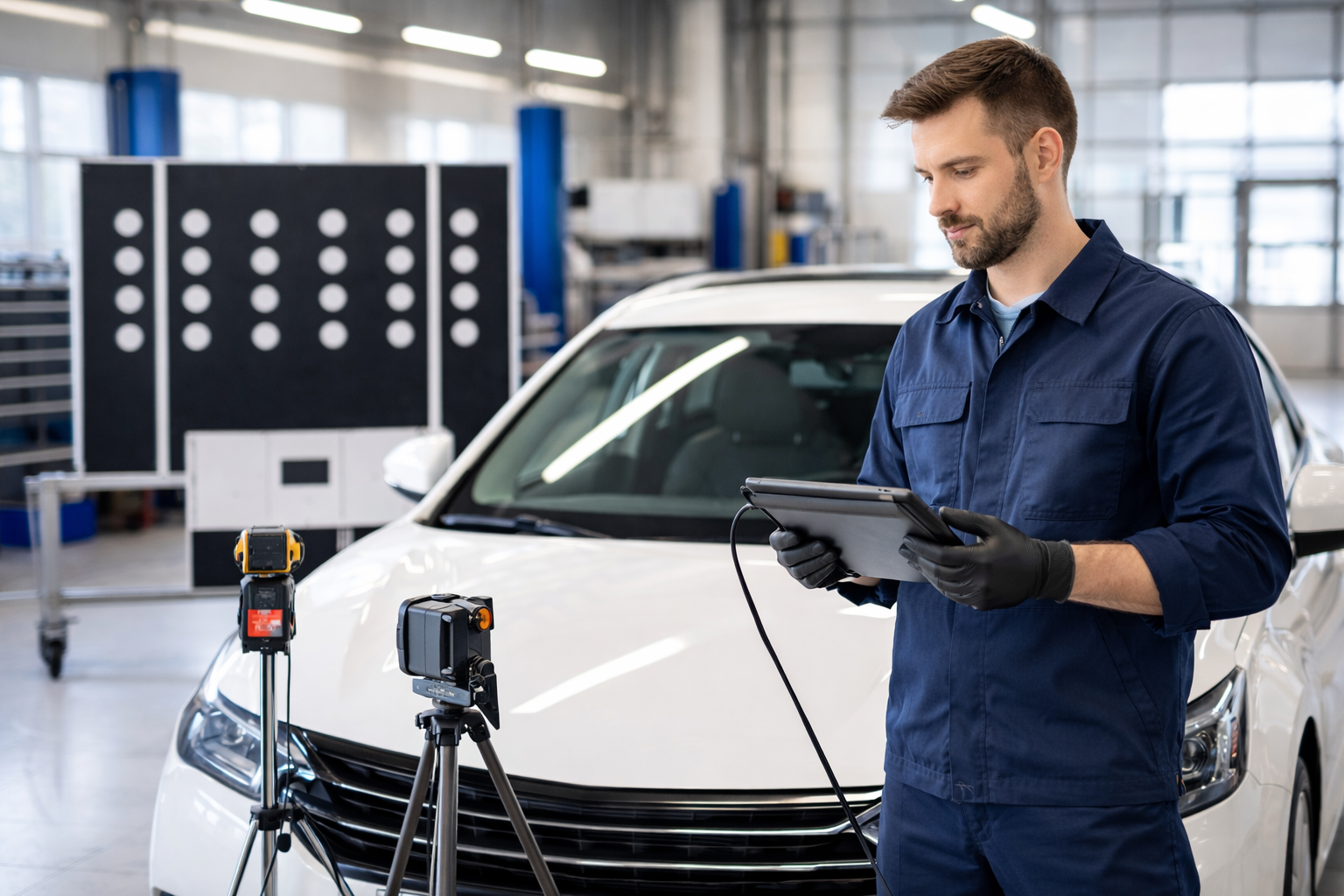
Why More Dealerships Are Bringing Auto Glass and ADAS Calibration In-House. Auto glass work is already coming through your service drive.
The question is simple.
Are you keeping the revenue?
Many dealerships still send glass replacement and ADAS calibration to sublet vendors. It feels easy. It feels safe. But it often means giving up parts margin and labor revenue.Today, more stores are changing that.They are bringing glass and calibration in-house and turning it into a fixed ops profit center.
Here’s why.
Glass Work Is Already in Your Store
Windshield damage happens every day. Customers call your service department first. Collision jobs require glass replacement. Insurance claims flow through your advisors.
You are already involved.
Modern vehicles now include Advanced Driver Assistance Systems (ADAS). These systems use cameras and sensors mounted to the windshield. According to the National Highway Traffic Safety Administration (NHTSA), safety systems like forward collision warning and lane departure warning are common in new vehicles.
When a windshield is replaced, those systems often require calibration. That means every windshield can include:
- Glass parts revenue
- Calibration labor revenue
- Insurance billing revenue
The opportunity already exists. It is just a matter of who captures it.
What Happens When You Sublet
When glass work goes to an outside vendor, several things happen.
You lose the parts markup.
You lose the calibration labor.
You lose control of scheduling.
You also limit your visibility into the true profit of the job. Automotive News continues to report that fixed operations are critical as vehicle margins tighten. Service absorption matters more than ever.
Glass and calibration can support that absorption.
When sublet, that support disappears.
ADAS Is Not Slowing Down
Vehicle technology continues to grow.
McKinsey & Company also reports that electronics and software now make up a growing share of vehicle value. The Insurance Institute for Highway Safety (IIHS) shows that crash avoidance systems are expanding across most new models.
More cameras.
More sensors.
More required calibrations.
As the vehicle fleet modernizes, calibration events increase which creates more labor hours per repair.
More labor hours mean more revenue potential.
What an In-House Program Looks Like
Bringing glass in-house does not mean adding chaos.
When done correctly, it follows a clear structure.
1. Equipment Strategy
Most dealerships finance equipment. That allows the program to support itself through retained gross.
2. Integrated Workflow
A proper glass workflow connects to your DMS or point-of-sale system.
That allows for:
- VIN-based part lookup
- Accurate billing
- Insurance processing
- Profit tracking
3. Insurance Billing Control
Many glass repairs go through insurance. Handling billing internally keeps control in your store.
4. Technician Training
Some stores cross-train existing techs. Others hire dedicated glass specialists.
Either way, the goal is simple.
Keep the work inside.
Why Dealers Are Evaluating This Now
Several factors are pushing this decision.
Vehicle margins are under pressure.
Service absorption is critical.
ADAS penetration continues to grow.
Glass replacement is not new.
Calibration revenue is.
And it is growing.
Many dealerships are finding that a structured glass and calibration program can generate meaningful annual revenue per rooftop. In many markets, that number reaches into the high six figures.
But the real shift is not about the number.
It is about control.
Control of margin.
Control of workflow.
Control of customer experience.
Is It Worth a Closer Look?
If you are a Fixed Ops Director, Service Manager, or Dealer Principal, ask yourself:
How much glass already flows through your store each month?
How much calibration revenue is currently going to sublet vendors?
How much of that could be retained internally?
The work already exists. It is already in your service drive.
If you want to understand how dealerships are structuring in-house auto glass and ADAS calibration programs, learn more here: https://bit.ly/3OonUXZ
Because the question is not whether your store replaces windshields. The question is whether you keep the revenue.